
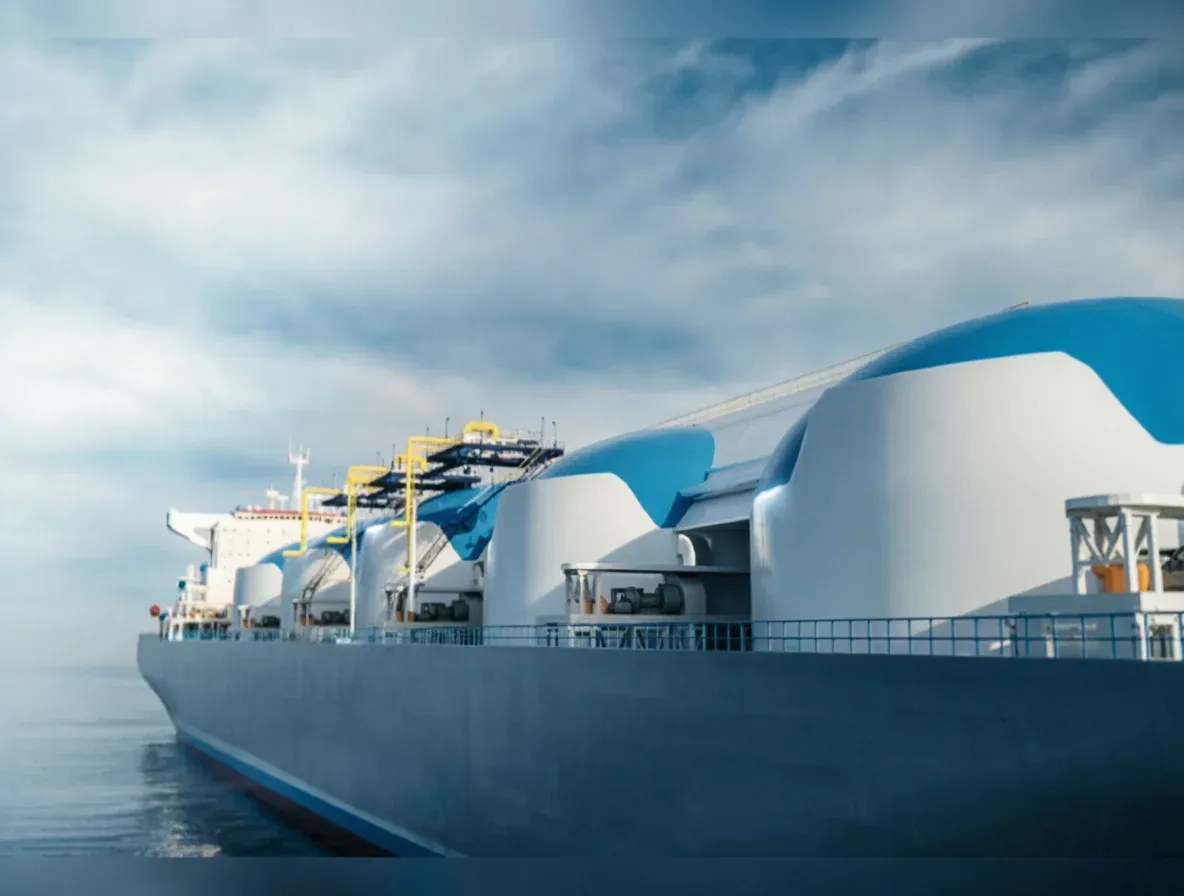
U.S. liquefied natural gas producers failed to capitalize on a significant rally in global gas prices during July. Despite higher benchmarks in Asia and Europe, export volumes remained largely unchanged from June levels. This stagnation was driven by scheduled facility maintenance and seasonally lower production, preventing exporters from fully leveraging the arbitrage opportunities presented by rising international market prices.
July Export Volumes and Maintenance Constraints
Preliminary data from LSEG indicates that U.S. LNG exports slipped slightly to 10.48 million metric tons (MT) in July, down from 10.6 MT in June. This plateau occurred even as the Asian Japan Korea Marker (JKM) averaged $19.10 per mmBtu and Europe's Dutch TTF averaged $18.07 per mmBtu. Both benchmarks saw substantial increases from June levels. Exporters utilized the summer months for essential maintenance, as warmer temperatures reduce the efficiency of supercooling gas. Major facilities, including the nation's third-largest exporter, Freeport LNG, underwent maintenance during this period. Jason Feer of Poten and Partners noted that while projects have recently run above nameplate capacity, operators are unwilling to defer maintenance and risk unscheduled future outages.
Regional Demand Shifts and Market Destinations
While total volumes remained flat, destination patterns shifted. Europe remained the primary buyer, receiving 4.76 MT in July, up from 4.41 MT in June, as it replenishes inventories for winter. Asia took 3.32 MT, a slight increase from 3.25 MT; however, the limited growth suggests sellers lacked uncommitted supply to exploit the JKM premium. Latin America saw growth, with exports rising to 1.07 MT from 0.96 MT, led by Brazil and driven by Southern Hemisphere winter demand. This occurred despite competition from Trinidad and Tobago’s Atlantic LNG, which shipped over 0.5 MT. Meanwhile, Egypt saw imports drop from a record 1.06 MT in June to 0.63 MT in July, though it remains a significant purchaser.
Key Takeaways
- U.S. LNG exports fell slightly to 10.48 MT in July from 10.6 MT in June.
- The JKM benchmark rose to $19.10 per mmBtu in July, up from $17.33 in June.
- European imports increased to 4.76 MT in July, accounting for nearly half of all U.S. exports.
EnergyInsyte's Take
In our view, the July data highlights a critical tension between maximizing short-term arbitrage profits and ensuring long-term infrastructure reliability. The decision by major players like Freeport LNG to prioritize scheduled maintenance over chasing higher JKM and TTF prices signals a disciplined approach to asset management. For decision-makers, this suggests that U.S. export growth is currently constrained by operational necessity rather than a lack of global demand. The inability to respond to price rallies indicates that uncommitted supply is tightening.
Questions & Answers
Why did U.S. exporters miss the July price rally?
Exporters were constrained by seasonal maintenance schedules and lower production levels. Facilities, including Freeport LNG, prioritized essential upkeep to avoid the risk of unscheduled outages, which limited the available uncommitted supply needed to exploit higher prices in Asia and Europe.
How is the European market impacting U.S. export composition?
Europe has become the dominant destination, absorbing 4.76 MT in July. This represents nearly 50% of total U.S. exports, driven by strategic efforts to replenish gas inventories in preparation for the upcoming winter season.
What does the Asian market trend suggest about supply availability?
Despite a significant rise in the JKM benchmark to $19.10 per mmBtu, Asian imports only grew slightly to 3.32 MT. This suggests that U.S. sellers had very little excess capacity to divert toward the higher-priced Asian market.
How is competition affecting the Latin American market?
While U.S. exports to Latin America grew to 1.07 MT due to winter demand, they faced increased competition from Trinidad and Tobago, where Atlantic LNG's Train 4 returned to service, shipping over 0.5 MT to the region.
Source: REUTERS