Refinyx is positioning itself to bypass the reliance on Asian refining by offering a localized, cost-competitive alternative for critical materials recovery. The Stockholm-based company emerged from stealth today, announcing the acquisition of a 134-patent technology portfolio and a 13,000-square-foot materials science pilot and lab facility in Västerås, Sweden, formerly owned by Northvolt. Backed by investment firm Qarlbo Energy, Refinyx aims to provide the engineering and technology necessary for industrial operators to build and scale large-scale recovery plants. The company has already secured its first major U.S. customer, signaling an immediate push into the American market as demand for domestic processing capacity intensifies.
Refinyx Acquires Northvolt Patent Portfolio and Pilot Facility
The company’s launch is anchored by the acquisition of intellectual property and physical infrastructure previously held by Northvolt. This includes a 13,000-square-meter (1,200-square-foot) state-of-the-art pilot and lab facility located in Västerås, Sweden. The technology platform, developed over eight years by Co-Founders Mahmood Alemrajabi and Ramiar Vaziri, is designed to recover nickel, cobalt, and lithium from various sources, including batteries, gigafactory waste, industrial residues, and municipal waste streams. Refinyx is also expanding this technological scope to include rare earths, phosphorus, and other strategic materials.
The leadership team behind Refinyx consists of the senior personnel formerly responsible for Northvolt Revolt, Northvolt's recycling division. This team has already overseen the implementation of this process design at an industrial-scale plant in Skellefteå, Sweden. By leveraging this existing R&D and industrial experience, Refinyx intends to partner with global industrial operators to design, build, and ramp commercial-scale plants. The company's business model focuses on providing the technical expertise required for established operators to deploy recovery capacity locally, rather than acting as a standalone recycler. This approach seeks to address the growing requirement for resilient, domestic supply chains in the U.S. and EU.
Decoupling Critical Material Recovery from Asian Refining
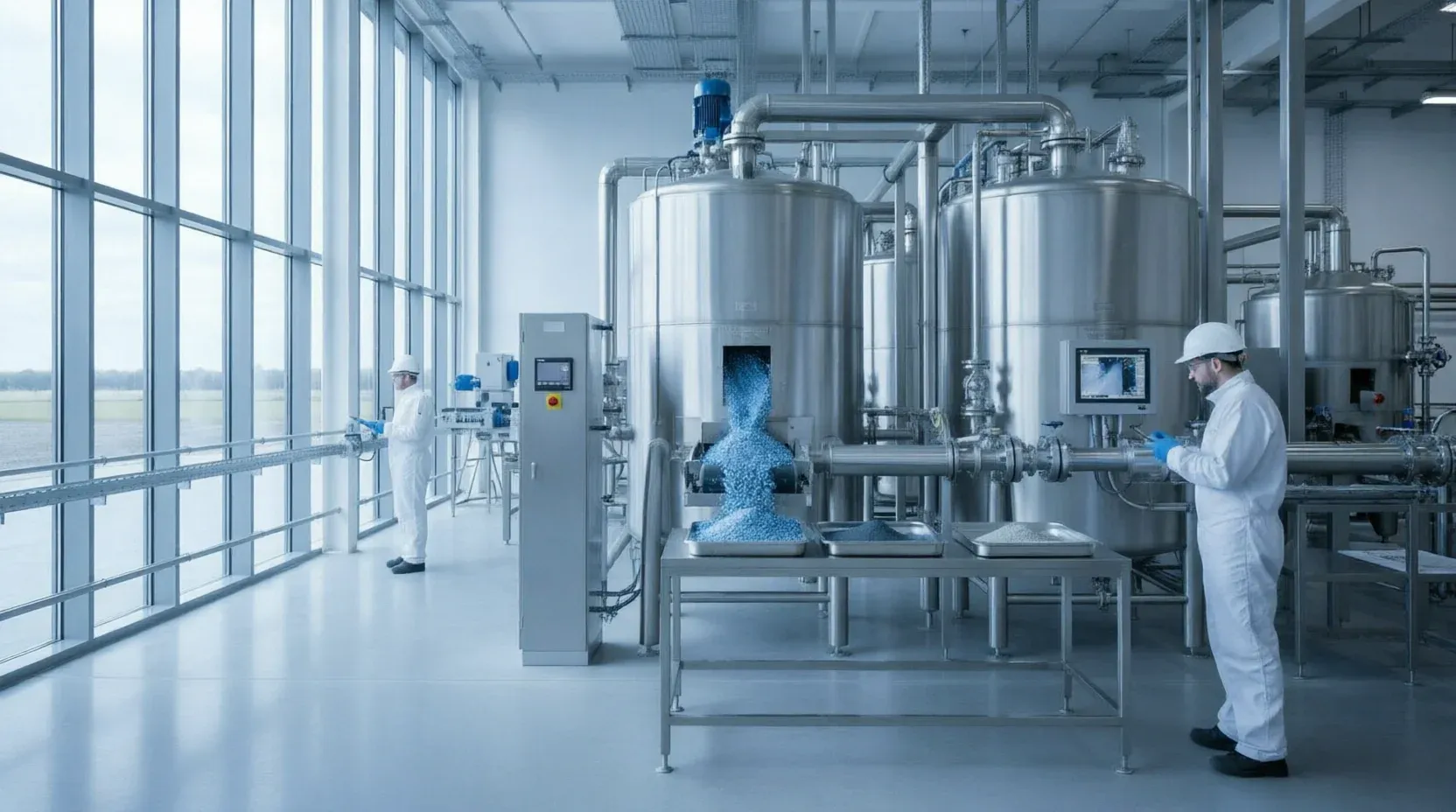
Refinyx is attempting to disrupt the current recycling value chain by eliminating the need for intermediate refining steps that typically require shipping material to Asia for final upgrading. The company claims its technology has demonstrated direct battery-grade output at an industrial scale without the use of organic solvents. By removing conventional solvent extraction from the process, Refinyx suggests it can reduce equipment requirements, chemical consumption, waste handling, and the overall plant footprint. This technical distinction is intended to enable more modular deployment of recovery facilities closer to the source of waste.
The strategic motivation behind this technical architecture is to compete on fundamental industrial metrics: cost, quality, and reliability. According to Chief Business Officer Dhruv Malhotra, the company is moving away from business models that rely on "green premiums," "government-subsidy premiums," or "national-security premiums." Instead, Refinyx is positioning its technology to function as a standard industrial commodity process. This focus on cost-competitiveness is intended to ensure that circular critical materials can transition from a subsidized niche into a viable, long-term global industry. The company is backed by Qarlbo Energy, an investment firm owned by EQT founder Conni Jonsson’s Qarlbo and the Wallenberg Foundations-owned Thisbe, providing the capital intended to support international scaling.
Key Takeaways
- Refinyx acquired a 134-patent technology portfolio and a 13,000-square-foot pilot facility in Västerås, Sweden, formerly owned by Northvolt.
- The technology platform recovers nickel, cobalt, and lithium from batteries and waste streams, with plans to expand into rare earths and phosphorus.
- The company has secured its first major U.S. customer and is backed by Qarlbo Energy to support global industrial scaling.
EnergyInsyte's Take
In our view, Refinyx is making a calculated bet that the "premium" era of battery recycling is nearing its end. While many players in the circular economy have leaned heavily on ESG mandates and government subsidies to justify their existence, Refinyx is explicitly targeting the industrial metals refining model. By acquiring the Northvolt Revolt IP and focusing on a solvent-free process, they are attempting to solve the two biggest hurdles to domestic recycling: high operational complexity and the logistical necessity of shipping semi-refined materials to Asia. If they can successfully deliver battery-grade materials without the heavy chemical footprint of traditional solvent extraction, they will offer a much more attractive proposition to industrial operators looking to build localized, modular recovery plants. This is a shift from "recycling as a service" toward "recycling as scalable industrial infrastructure."
Questions & Answers
How does Refinyx's technology differ from current Western recycling methods?
Refinyx aims to eliminate the need for organic solvents and the intermediate refining steps that currently force many Western recyclers to ship partially refined materials to Asia for final upgrading. The company claims its process can produce direct battery-grade output at an industrial scale, potentially reducing equipment requirements and plant footprints.
What is the strategic focus of the Refinyx business model?
Rather than operating as a standalone recycler, Refinyx provides the technology and engineering expertise to help established industrial operators design, build, and scale their own local recovery plants. This model is intended to facilitate the deployment of domestic processing capacity for critical materials.
Who is providing the financial backing for Refinyx's international expansion?
Refinyx is backed by Qarlbo Energy, which is taking an active ownership role. Qarlbo Energy is owned by the investment company Qarlbo (founded by EQT founder Conni Jonsson) and the Wallenberg Foundations-owned Thisbe.
Which specific materials is the Refinyx platform designed to recover?
The platform is currently designed to recover nickel, cobalt, and lithium from batteries, gigafactory waste, industrial residues, and municipal waste. The company is also expanding the platform to cover rare earths, phosphorus, and other strategic critical materials.
Source: Refinyx