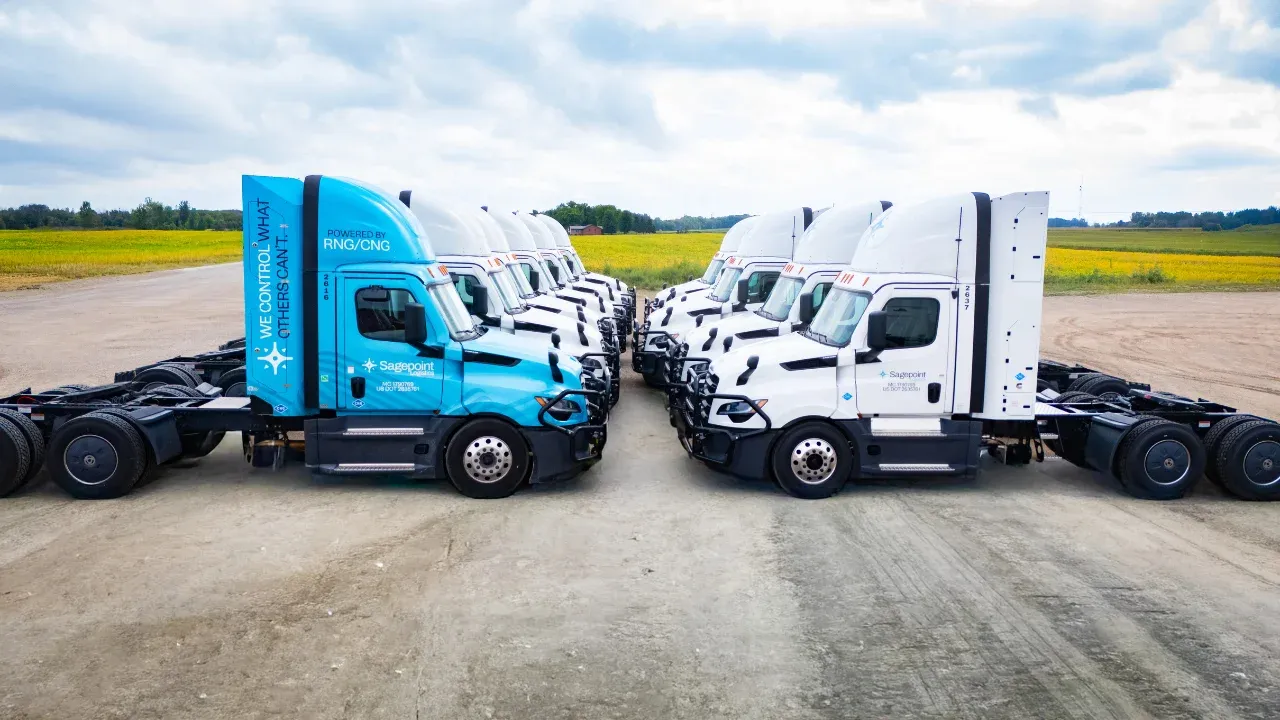
Sagepoint Logistics is leveraging vertical integration to capture growing demand for low-carbon freight by doubling its specialized vehicle capacity. The Carmel, Indiana-based carrier announced the addition of 60 heavy-duty trucks equipped with Cummins X15N engines, bringing its total low-carbon fleet to 120 vehicles. This expansion aims to address shipper requirements for sustainable transportation that maintains cost predictability. By utilizing Renewable Natural Gas (RNG) sourced from its parent company, Sagepoint Energy, the logistics arm is positioning itself to mitigate the volatility typically associated with traditional diesel-dependent freight models and global oil markets.
Sagepoint Logistics Scales RNG-Powered Fleet
The expansion of Sagepoint Logistics involves the deployment of 60 new heavy-duty trucks, effectively doubling the company's existing low-carbon fleet to 120 vehicles. These units utilize Cummins X15N engines and are powered entirely by Renewable Natural Gas (RNG). According to the company, this scaling effort is a direct response to increasing shipper demand for sustainable transportation solutions that do not compromise on reliability or cost-effectiveness. The expansion is being managed by Curt Reitz, Vice President of Logistics, who intends to use the increased capacity to enter new markets and serve a broader base of shippers across the United States. This move reinforces the company's stated goal of becoming a leading RNG-powered dedicated carrier within the Midwest and beyond. By increasing its vehicle count, Sagepoint is attempting to provide the scale necessary to meet the requirements of large-scale shippers looking to address their Scope 3 emissions through dedicated, fuel-specific logistics partnerships.
Vertical Integration and RNG Fuel Security
Sagepoint is utilizing a vertically integrated model to decouple its transportation costs from the volatility of the global diesel market. The logistics operation is directly linked to Sagepoint Energy, a waste-to-energy producer that supplies the RNG used in the fleet. This structure allows the company to control the fuel supply chain from the initial feedstock sourcing through to end-use consumption. Because the RNG is 100% domestic and produced at Sagepoint Energy's own facilities, the company claims it can offer customers greater cost predictability compared to traditional carriers. This integration is designed to manage three critical variables: core shipping costs, diesel price fluctuations, and the reduction of Scope 3 emissions for its clients. By controlling the energy source, Sagepoint is testing whether a closed-loop system between fuel production and heavy-duty transport can create a more stable economic environment for shippers who are increasingly pressured to adopt low-carbon logistics without incurring the unpredictable premiums often found in the broader green energy market.
Key Takeaways
- Sagepoint Logistics is doubling its low-carbon fleet from 60 to 120 heavy-duty trucks.
- The new vehicles utilize Cummins X15N engines powered by 100% domestic Renewable Natural Gas (RNG).
- The fleet is fueled by RNG sourced directly from the production facilities of its parent company, Sagepoint Energy.
EnergyInsyte's Take
In our view, Sagepoint’s strategy highlights a growing trend where decarbonization is being driven by vertical integration rather than just fuel switching. By linking Sagepoint Energy’s waste-to-energy production directly to Sagepoint Logistics' heavy-duty transport, the company is attempting to solve the two primary hurdles of green logistics: fuel availability and price volatility. This model suggests that for low-carbon heavy transport to reach industrial scale, carriers may need to move beyond being mere consumers of green fuels and instead become integrated players in the energy production lifecycle. This approach provides a hedge against the very market fluctuations that typically make sustainable transitions financially risky for large-scale shippers.
Questions & Answers
How does Sagepoint Logistics mitigate exposure to global oil market volatility?
The company utilizes an integrated model where its trucks are powered by 100% domestic Renewable Natural Gas (RNG) sourced directly from its parent company, Sagepoint Energy, rather than relying on traditional diesel.
What specific engine technology is being deployed in the new fleet expansion?
The 60 new heavy-duty trucks added to the fleet are equipped with Cummins X15N engines.
What is the primary strategic advantage offered to shippers regarding emissions?
Sagepoint is positioning its integrated model as a way for shippers to address Scope 3 emissions through a dedicated, low-carbon transportation solution that maintains cost predictability.
What is the total scale of Sagepoint's low-carbon fleet following this announcement?
Following the addition of 60 new trucks, Sagepoint Logistics has doubled its low-carbon fleet to a total of 120 vehicles.
Source: Sagepoint Logistics