Standard Nuclear is aggressively converting its qualified sales pipeline into binding commercial commitments to secure its position as a primary supplier for the advanced nuclear sector. The company reported that its total contract backlog surged to $576.9 million following a significant fuel supply agreement executed in August 2026, representing a massive leap from the $241.5 million reported at the end of the second quarter. This growth is underpinned by the company's transition from research and development toward industrial-scale production of Tri-structural Isotropic (TRISO) fuel. By leveraging a recent initial public offering to bolster its balance sheet, Standard Nuclear is positioning itself to meet rising demand for High-Assay Low-Enriched Uranium (HALEU) fuel. The company's recent financial results, covering the period ended June 30, 2026, highlight a strategic shift toward commercial revenue generation and the rapid scaling of domestic nuclear fuel manufacturing infrastructure.
Rapid Conversion of Pipeline to Binding Contracts
Standard Nuclear is successfully transitioning from non-binding interest to formal, revenue-generating agreements. While the company reported a total contract backlog of $241.5 million as of June 30, 2026, a subsequent agreement with Antares Nuclear, Inc. in August 2026 has pushed that figure to $576.9 million. This new agreement includes a firm commitment for one Metric Ton of Uranium (MTU) of HALEU TRISO fuel, alongside a customer option for up to seven additional MTU. This single move effectively increased the company's Funded Backlog—the portion of the backlog representing binding commitments—by approximately 93% to $119.3 million.
The company is also managing a substantial "Qualified Pipeline" of prospective orders. As of August 26, 2026, this pipeline stood at approximately $696.3 million, a decrease from the $986.3 million reported on June 30, 2026. Standard Nuclear attributes this decline not to a loss of interest, but to the successful conversion of these prospective opportunities into the executed contracts that now comprise its growing backlog. This conversion process is critical as the company targets a total serviceable addressable market estimated at $3.2 billion through 2030.
Furthermore, the company is deepening its commercial footprint through its first reactor core delivery. During the second quarter, Standard Nuclear delivered 50 kgU of TRISO fuel to Radiant Industries for its Kaleidos microreactor. Following the quarter's end, the company delivered the remaining balance to complete the first full reactor core of commercially produced TRISO fuel supplied by an independent U.S. manufacturer. This milestone suggests the company is moving beyond theoretical capability into active, commercial-scale fuel supply.
Scaling Domestic TRISO Production Infrastructure
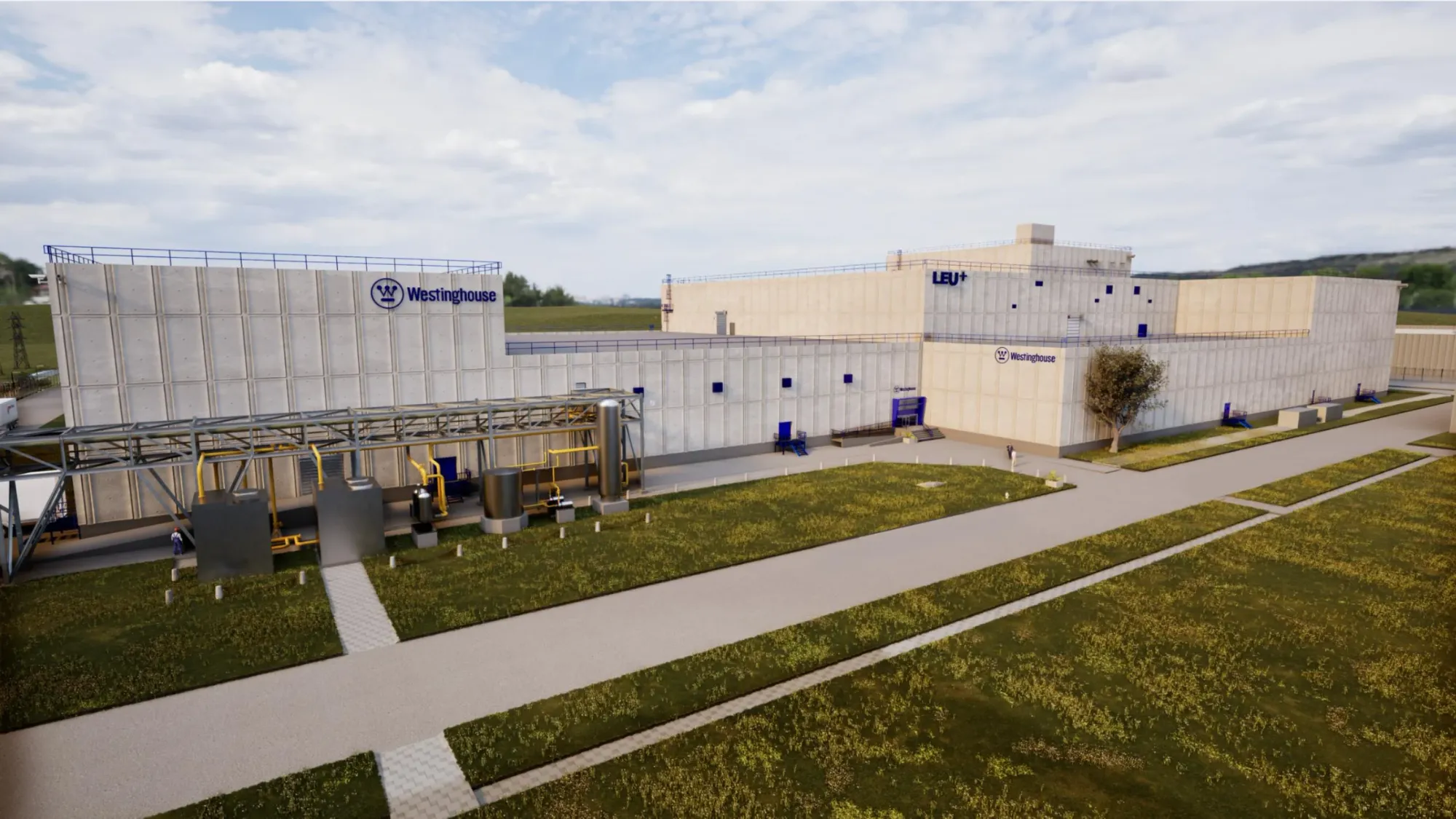
To support this growing demand, Standard Nuclear is rapidly advancing its manufacturing footprint through two new facilities in Tennessee (SN-TN) and Idaho (SN-ID). Construction at both sites is now substantially complete, with the company currently conducting start-up, commissioning, and authorization activities. Standard Nuclear is targeting an authorization to operate for both facilities in the fourth quarter of 2026. These identical sites are designed to start with a capacity of up to one MTU per year each, with a scalable design intended to reach 2.5 MTU per year per facility, creating a combined potential capacity of five MTU annually.
The company's regulatory progress is supported by the U.S. Department of Energy (DOE), which has approved the Preliminary Documented Safety Analysis for both the Tennessee and Idaho sites. Additionally, Standard Nuclear has been selected by the DOE for advanced contract negotiations under the Surplus Plutonium Utilization Program. This selection allows the company to negotiate the use of designated surplus plutonium for conversion into advanced reactor fuel, a move that could provide a strategic feedstock source.
Beyond its wholly-owned sites, Standard Nuclear is utilizing a joint venture with Framatome to expand its reach. In June 2026, the U.S. Nuclear Regulatory Commission approved a license amendment for Framatome's Richland, Washington facility, increasing its uranium enrichment limit and authorizing TRISO fuel particle fabrication. This regulatory milestone clears the path for the joint venture to begin production in 2027, with an expected initial capacity of approximately one MTU of TRISO fuel annually.
Key Takeaways
- Total contract backlog rose to $576.9 million following an August 2026 agreement with Antares Nuclear, Inc., up from $241.5 million at the end of Q2.
- Standard Nuclear completed the first full reactor core of commercially produced TRISO fuel supplied by an independent U.S. manufacturer following the second quarter.
- The company targets authorization to operate for its new Tennessee and Idaho production facilities in the fourth quarter of 2026.
EnergyInsyte's Take
In our view, Standard Nuclear is successfully navigating the most difficult phase of the advanced nuclear lifecycle: the transition from a technology developer to a reliable industrial supplier. The massive six-fold increase in backlog since March 2026 is a significant signal that the market is moving past the "proof of concept" stage and into a phase of actual procurement. By securing binding commitments for HALEU TRISO fuel, the company is effectively de-risking its revenue model.
However, the company's focus must now shift entirely to execution and regulatory timing. The target of obtaining authorization to operate for the Tennessee and Idaho facilities by Q4 2026 is ambitious. Any delays in these commissioning or authorization activities could create a bottleneck between the surging backlog and the company's ability to recognize revenue. Furthermore, while the recent IPO provided a robust, debt-free balance sheet of approximately $239.9 million, the company must now manage the high capital intensity of scaling these facilities to meet the $3.2 billion addressable market it has identified.
Questions & Answers
How does the recent Antares Nuclear agreement impact Standard Nuclear's immediate revenue visibility?
The agreement significantly strengthens near-term visibility by increasing the Funded Backlog—which represents binding commitments—by approximately 93% to $119.3 million. This shift from non-binding arrangements to firm commitments for one MTU of HALEU TRISO fuel provides a more predictable foundation for upcoming production cycles.
What is the strategic significance of the company's selection for the Surplus Plutonium Utilization Program?
Selection for this DOE program allows Standard Nuclear to enter advanced contract negotiations to convert surplus plutonium into advanced reactor fuel. As the only participant without a proprietary reactor program, the company is positioning itself as a pure-play, independent supplier capable of providing fuel to any advanced reactor developer.
What role does the Framatome joint venture play in the company's long-term capacity strategy?
The Framatome joint venture provides a secondary, incremental production route that is independent of Standard Nuclear's wholly-owned facilities. Following NRC approval in June 2026, the Richland, Washington site is expected to begin TRISO fuel production in 2027, initially providing approximately one MTU of capacity annually.
How is Standard Nuclear financing its current expansion and facility commissioning?
The company is utilizing a combination of existing cash reserves and proceeds from its July 2026 initial public offering. The IPO added approximately $137.7 million in net proceeds, leaving the company with a pro forma, debt-free balance sheet of approximately $239.9 million to fund construction, commissioning, and the build-out of public company infrastructure.
Source: Businesswire