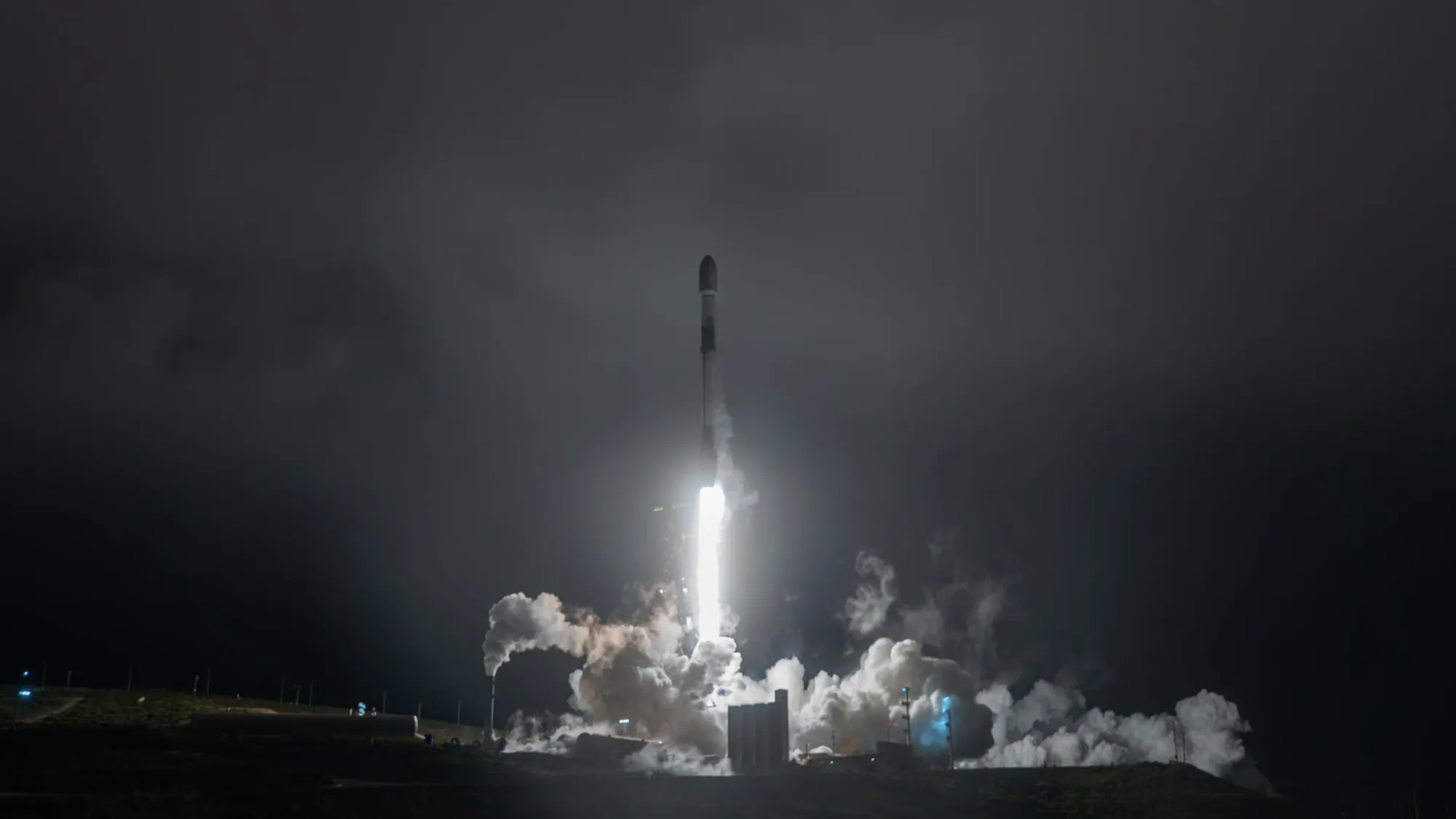
Axelspace Corporation confirmed the successful launch and signal acquisition of its seven GRUS-3 Earth observation microsatellites on July 7, 2026. The satellites, launched via SpaceX Falcon 9 from Vandenberg Space Force Base, are now operating normally and will support future data services. This deployment advances Axelspace’s Earth observation capabilities, potentially enabling enhanced monitoring for energy infrastructure and grid planning.
GRUS-3 Launch and Signal Acquisition Details
The GRUS-3 satellites were integrated by Exolaunch and launched aboard SpaceX’s Transporter-17 rideshare mission. All seven satellites achieved their intended orbit, with first radio signals received shortly after deployment. Axelspace is currently conducting critical on-orbit operations to validate functionality ahead of commercial service rollout. The launch follows prior announcements confirming the mission’s July 2026 timeframe and the integration of Nikon telescopes for imaging.
Satellite Bus Development Backed by NEDO Funding
The GRUS-3’s versatile satellite bus system stems from projects subsidized by Japan’s New Energy and Industrial Technology Development Organization (NEDO), including the “Development and Demonstration of General-Purpose CubeSat and Microsatellite Buses” (FY2023-2026). This system underpins the microsatellites’ operational flexibility, supporting Axelspace’s dual business lines: AxelLiner (satellite development services) and AxelGlobe (Earth observation data delivery).
Strategic Implications for Energy and Infrastructure Monitoring
The GRUS-3 constellation’s deployment signals growing commercial viability for high-resolution Earth observation data. For energy executives and grid operators, such data could inform infrastructure planning, environmental assessments, and asset monitoring. However, the company has not disclosed specific timelines for service availability or pricing models, leaving operational and economic details pending.
Key Takeaways
- Seven GRUS-3 microsatellites launched July 7, 2026, via SpaceX Falcon 9 from Vandenberg Space Force Base.
- First radio signals received from all satellites; normal operations confirmed.
- Satellite bus development supported by NEDO projects (FY2023-2026) and prior METI funding (FY2021-2022).
EnergyInsyte's Take
This deployment underscores the maturation of commercial Earth observation constellations for industrial applications. While Axelspace’s focus remains on space accessibility, the GRUS-3’s integration of Nikon optics and NEDO-backed infrastructure suggests potential utility for energy stakeholders requiring precise, scalable data. The lack of disclosed service timelines or economic terms, however, limits immediate actionable insights for B2B adopters. Monitoring future updates on data delivery mechanisms and cost structures will be critical to assessing real-world impact.
Source: Businesswire