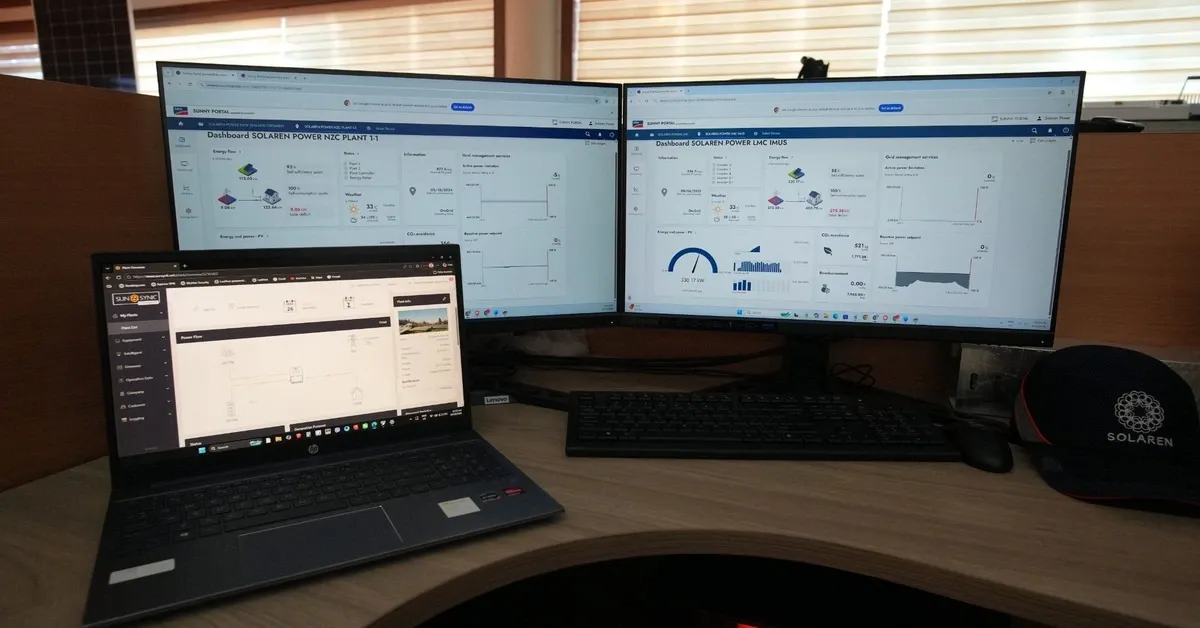
Solaren Renewable Energy Solutions Corporation has identified real-time energy monitoring as a systematically neglected capability within the Philippine commercial solar market. While operational solar systems generate continuous streams of performance data, much of this information remains unreviewed until equipment failures or billing anomalies occur. This oversight represents a structural underinvestment that reduces the financial return of installations and delays the detection of degradation or faults. For commercial entities, failing to utilize existing data leads to invisible energy losses and diminished long-term asset performance.
The Neglected Capability of Real-Time Monitoring
Most commercial grid-tied inverters sold in the Philippines include built-in data logging capabilities. These units record critical metrics, including generation output, DC input values, grid voltage, frequency, and fault events, at intervals ranging from one to fifteen minutes. This data is typically accessible via manufacturer portals or building management systems. However, Solaren observes that this information often sits untouched on many commercial sites. Site managers frequently only review generation figures after receiving an electricity bill or noticing a visible malfunction.
This lack of oversight allows performance degradation to go undetected for months. Factors such as soiling, new shading from vegetation, neighboring structures, panel degradation, or inverter underperformance can significantly drag down production. Because a system generating 10% below expected output incurs the same maintenance and insurance costs as a full-capacity system, the lost savings become permanent financial losses. Solaren addresses this by integrating monitoring as a standard design element, providing client-accessible dashboards and threshold alerts to prompt immediate intervention.
Implications for Commercial Asset Management
The absence of active monitoring extends beyond simple performance tracking; it impacts fundamental operational safety. Real-time monitoring supports the early detection of isolation faults, arc-fault conditions, ground faults, and inverter alarms. Without these alerts, safety-critical events may persist until a physical inspection is conducted or a protection device trips. For industrial and commercial owners, the inability to monitor these systems in real-time creates a gap between the hardware's potential and its actual economic output.
Neil Pearce, Managing Director of Solaren Renewable Energy Solutions Corporation, emphasizes that a commercial solar system is a twenty-five-year financial asset. He notes that while no one would manage other assets of that scale without reviewing the numbers, solar rooftops across the country frequently operate without such oversight. By treating monitoring as a standard requirement rather than an optional upgrade, Solaren aims to transform raw data into early warnings and measurable cost reductions, ensuring that the long-term financial viability of solar investments is protected against invisible inefficiencies.
Key Takeaways
- Most Philippine commercial grid-tied inverters ship with built-in data logging for metrics like DC input and grid voltage.
- Undetected performance degradation, such as a 10% output shortfall, results in permanent loss of projected savings.
- Solaren integrates real-time dashboards and threshold alerts as a standard component of their commercial installations.
EnergyInsyte's Take
In our view, Solaren’s findings highlight a critical maturity gap in the Philippine commercial solar sector. The transition from simple hardware deployment to sophisticated asset management is essential for long-term investor confidence. When operators treat solar installations as "set and forget" technologies, they ignore the reality of solar as a high-stakes, twenty-five-year financial asset. This data neglect creates a disconnect between capital expenditure and actualized energy savings. As the market evolves, the ability to convert latent inverter data into actionable maintenance intelligence will likely become the primary differentiator for developers seeking to guarantee reliable returns for commercial and industrial clients.
Source: https://www.einpresswire.com/